Realism
Realism spans roughly 1840–1880.
Realism ran from about 1840 to 1880, emerging chiefly in France as a rejection of Romantic idealization and Neoclassical grandeur alike. Realist painters depicted ordinary, unembellished scenes of everyday and working-class life, rendered with a sober palette and matter-of-fact honesty rather than heroic or exotic drama.
Why it looks the way it does
Industrialization, urban growth, and the social upheaval around the 1848 revolutions turned artists’ attention toward contemporary, often working-class subjects — laborers, peasants, city streets — painted without sentimentality or flattery. Realists rejected mythological and historical subject matter in favor of what they could actually observe, sometimes painting ordinary people at the large scale previously reserved for “important” historical or religious scenes, which many contemporary critics found provocative in itself.
How to tell it apart
Compared to Romanticism, Realism drops drama, exoticism, and idealized emotion for plain observed fact. Compared to Impressionism, which follows it, Realism keeps traditional smooth, blended paint handling and a darker tonal palette; Impressionism breaks the painted surface into visible, separate brushstrokes and a brighter palette to capture fleeting light rather than solid, static form.
Key names
Gustave Courbet is the movement’s central figure and its most vocal defender, alongside Jean-François Millet and Honoré Daumier.
Updated: 2026-07-10
Artworks from this movement
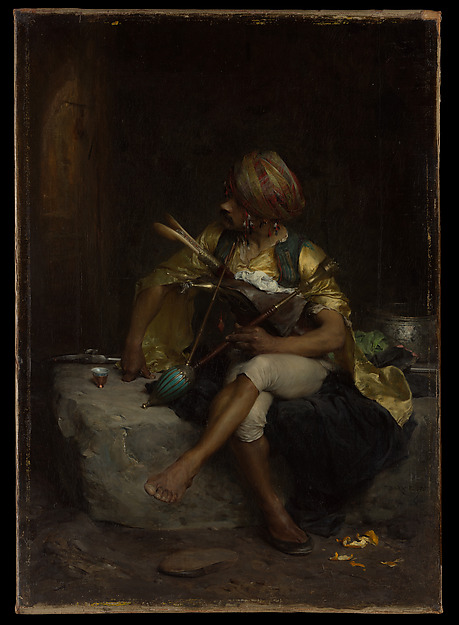 A Bashi-Bazouk (1875)
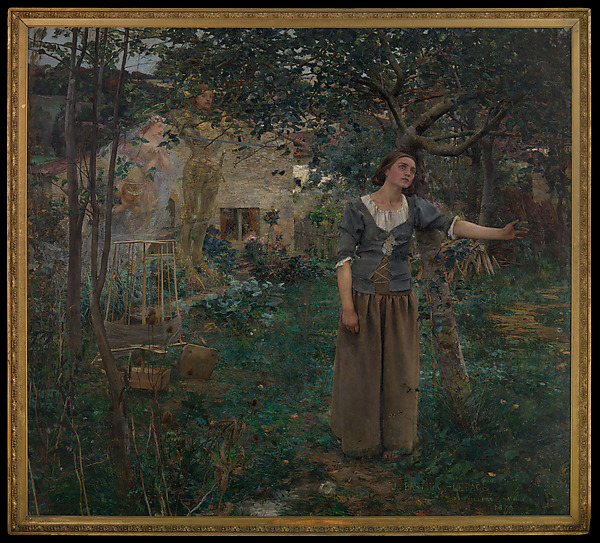 Joan of Arc (1879)
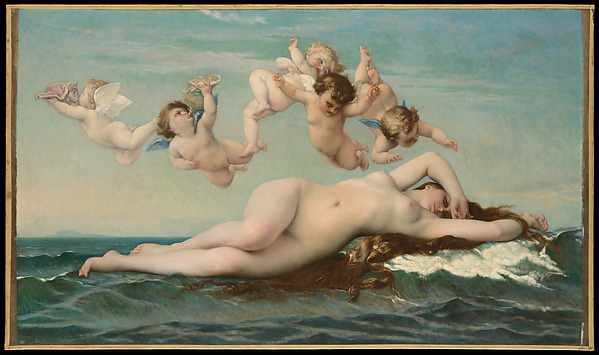 The Birth of Venus (1875)
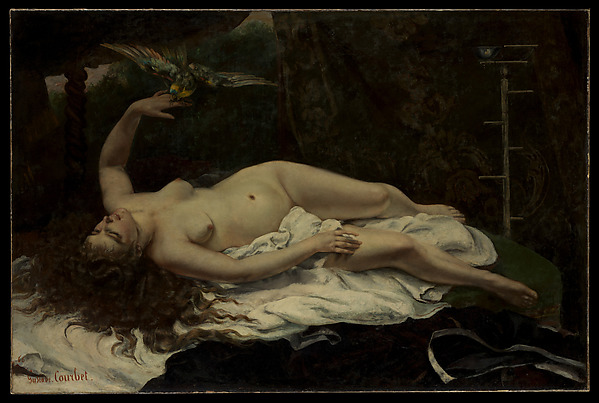 Woman with a Parrot (1866)
 The Woman in the Waves (1868)
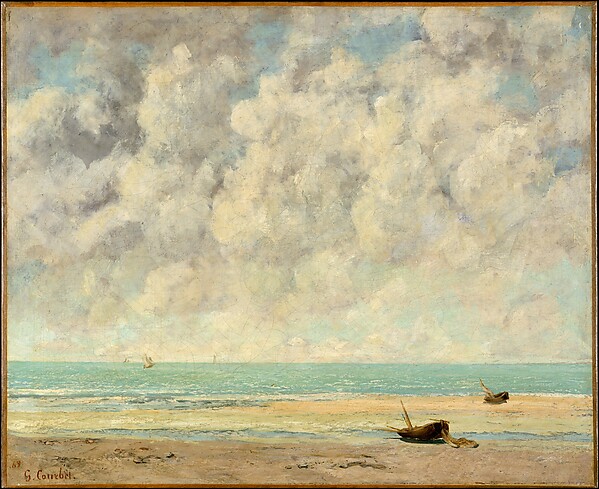 The Calm Sea (1869)
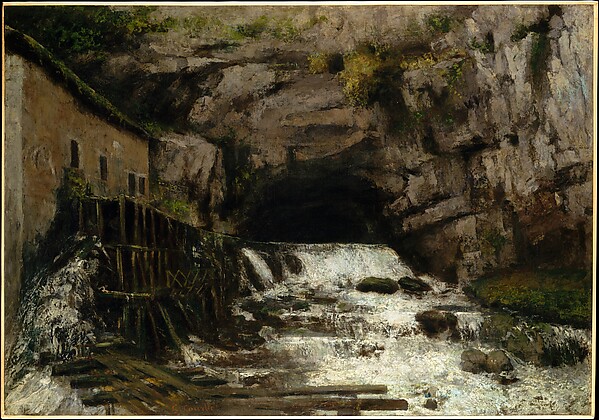 The Source of the Loue (1864)
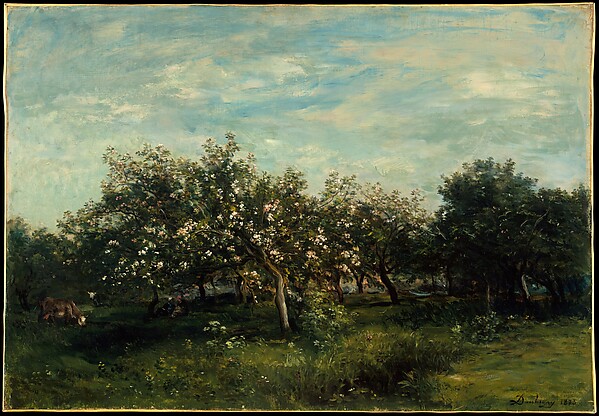 Apple Blossoms (1873)
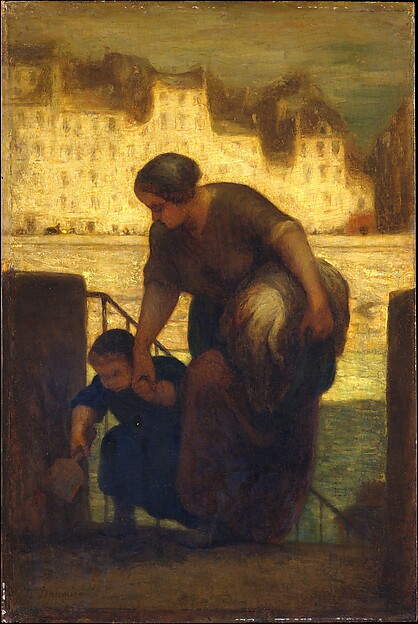 The Laundress (186[3?])
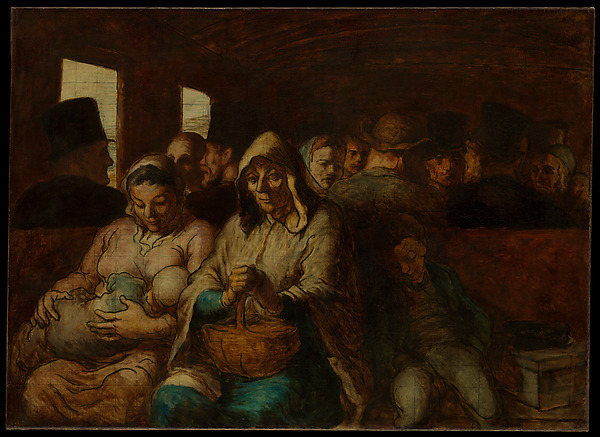 The Third-Class Carriage (1864)
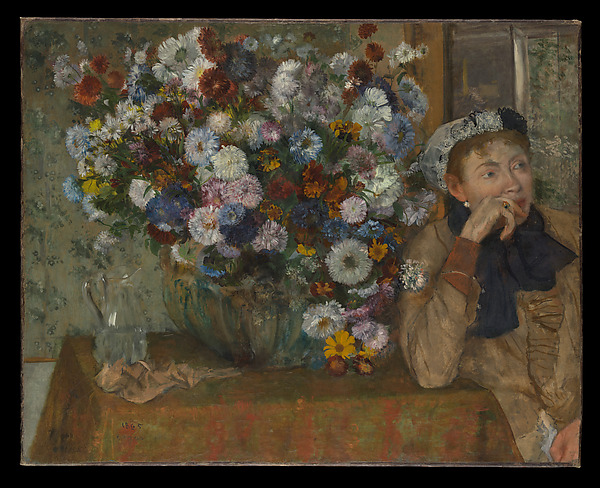 A Woman Seated beside a Vase of Flowers (Madame Paul Valpinçon?) (1865)
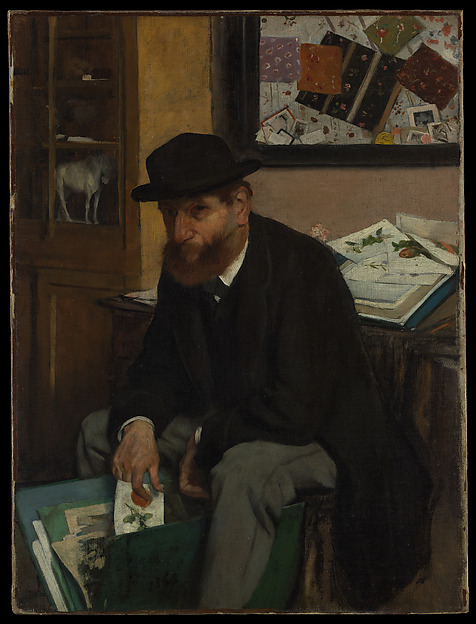 The Collector of Prints (1866)
 Dancers Practicing at the Barre (1877)
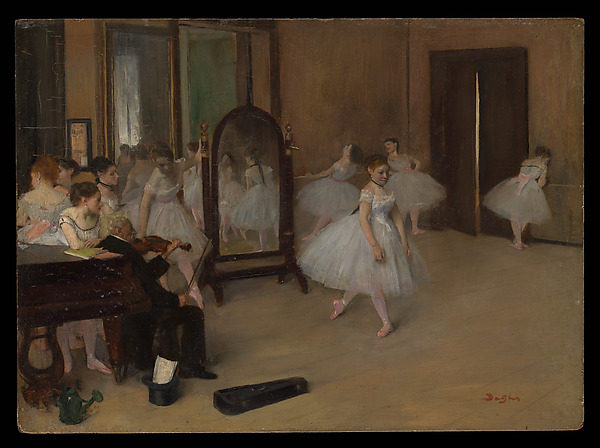 The Dancing Class (ca. 1870)
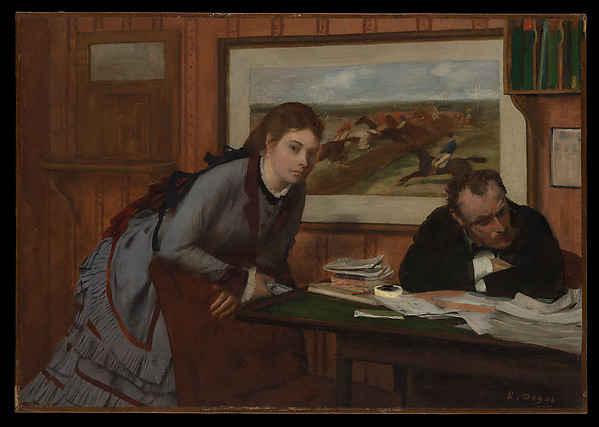 Sulking (ca. 1870)
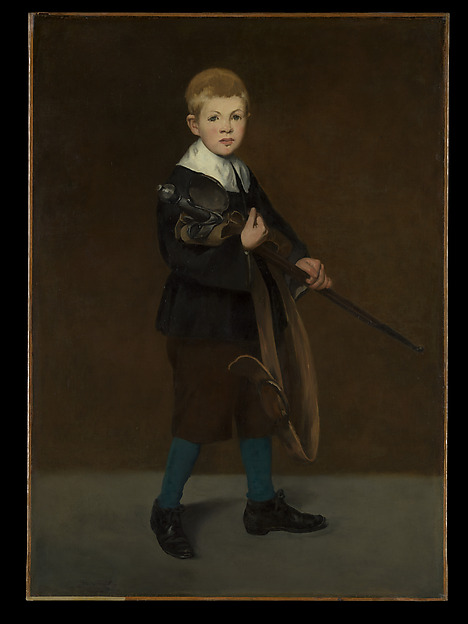 Boy with a Sword (1861)
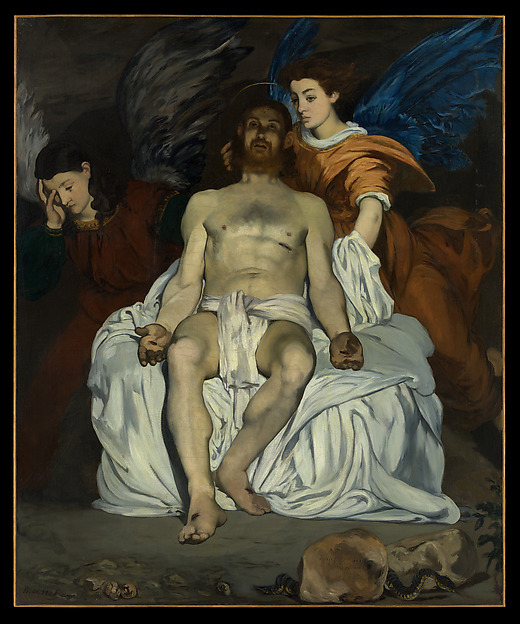 The Dead Christ with Angels (1864)
 Young Lady in 1866 (1866)
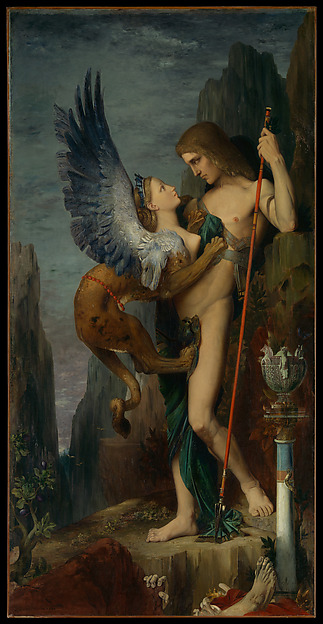 Oedipus and the Sphinx (1864)
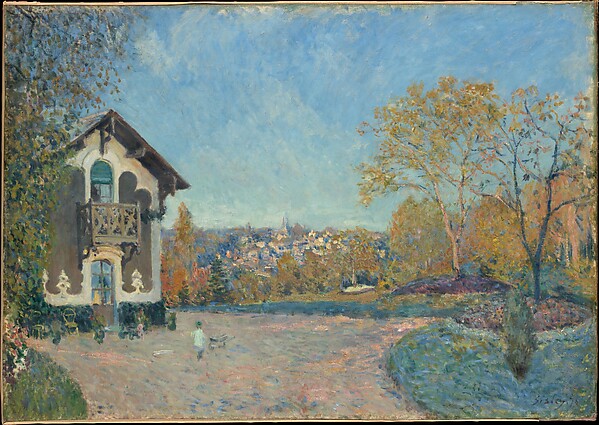 View of Marly-le-Roi from Coeur-Volant (1876)
 Madame Manet (Suzanne Leenhoff, 1829–1906) at Bellevue (1880)
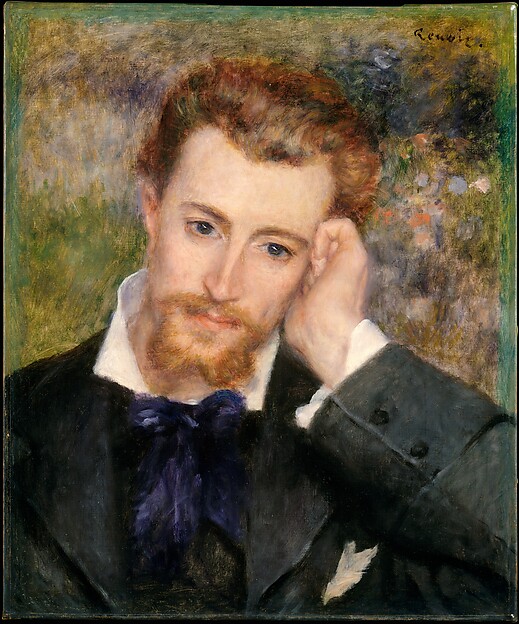 Eugène Murer (Hyacinthe-Eugène Meunier, 1841–1906) (1877)
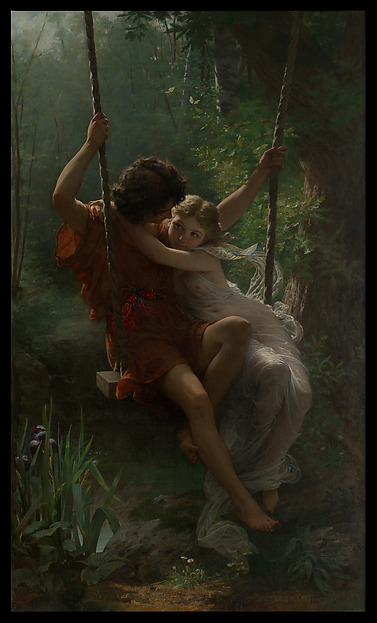 Springtime (1873)
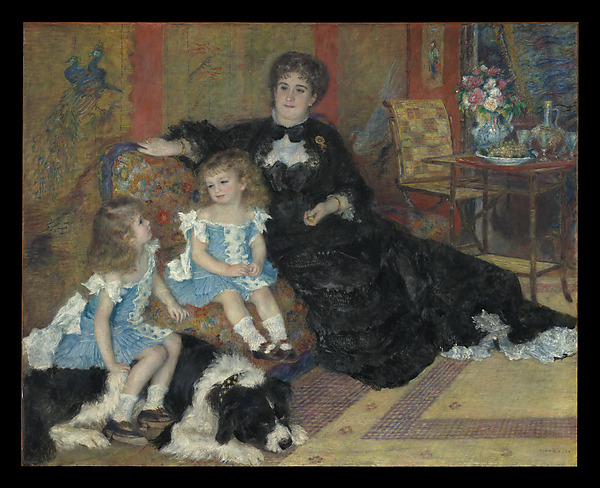 Madame Georges Charpentier (Marguerite-Louise Lemonnier, 1848–1904) and Her Children, Georgette-Berthe (1872–1945) and Paul-Emile-Charles (1875–1895) (1878)
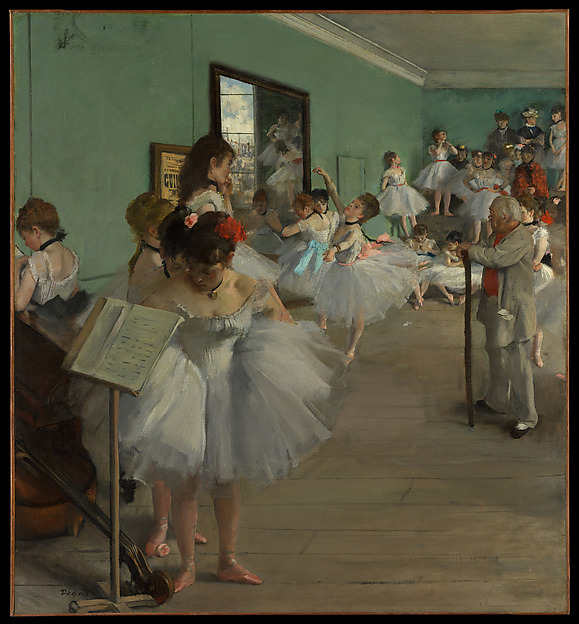 The Dance Class (1874)