Early Renaissance
Early Renaissance spans roughly 1400–1495.
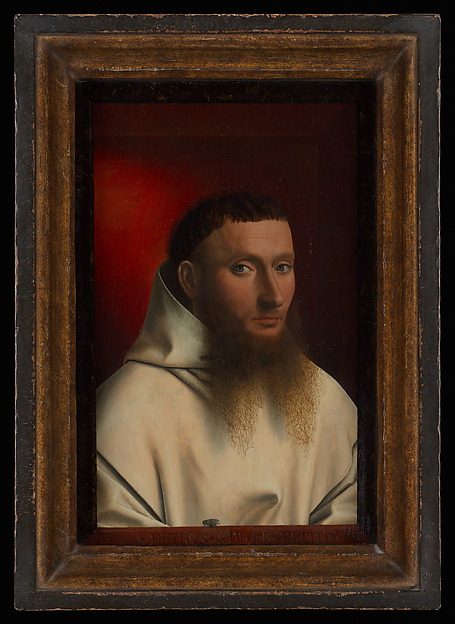
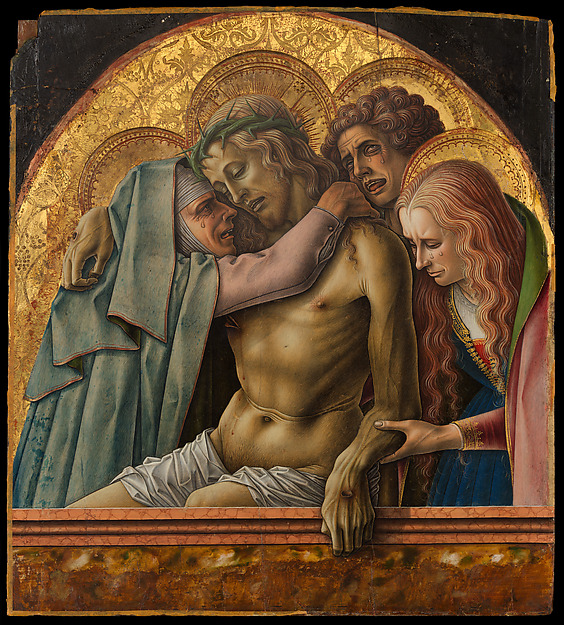
The Early Renaissance ran from about 1400 to 1495, centered above all in Florence. It is defined by the invention and spread of linear perspective, a new anatomical naturalism in the human figure, and a revived interest in classical Greek and Roman art as a model worth studying rather than surpassing.
Why it looks the way it does
Florentine humanism placed new value on direct observation, mathematics, and the achievements of antiquity. Brunelleschi’s rules for linear perspective gave painters a reliable method for constructing believable space, which Masaccio applied almost immediately to figures with real weight and standing on solid ground. Artists also studied anatomy and ancient sculpture directly, producing more individualized faces and bodies than Gothic convention allowed, while patronage from wealthy Florentine families and guilds funded increasingly ambitious civic and religious commissions.
How to tell it apart
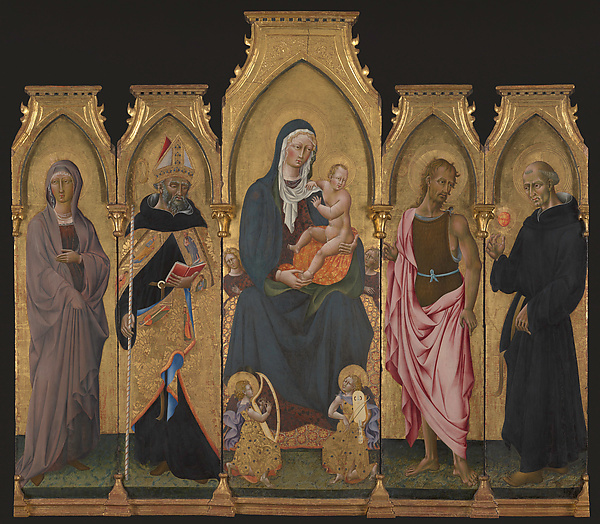
Compared to the flat, gold-ground Gothic art that precedes it, the Early Renaissance gains real depth, volume, and believable architectural settings. Compared to the High Renaissance that follows, Early Renaissance painting can look more linear and additive — compositions built from clearly drawn, separate parts — where the High Renaissance fuses figures and space into a single, atmospheric, effortlessly balanced whole.
Key names
Masaccio is the pivotal figure, alongside Fra Angelico, Sandro Botticelli, and Piero della Francesca, with the sculptor Donatello driving parallel innovations in three-dimensional form.
Updated: 2026-07-10